Category: Azure
API Management Common Policies – Nutshell
Common Policies
1. Authentication
check-header – Validates the presence and value of a header.
<check-header name="Authorization" exists="true" />
check-query-parameter – Validates the presence and value of a query parameter.
<check-query-parameter name="apikey" exists="true" />
2. Rate Limiting
rate-limit-by-key – Limits the number of calls based on a key.
<rate-limit-by-key calls="100" renewal-period="60" />
rate-limit – General rate limiting for API calls.
<rate-limit calls="1000" renewal-period="3600" />
3. Caching
cache-lookup – Retrieves data from the cache.
<cache-lookup vary-by-developer="false" vary-by-developer="false" />
cache-store – Stores data in the cache.
<cache-store duration="300" />
4. Transformation
set-header – Sets or modifies HTTP headers.
<set-header name="X-Custom-Header" exists-action="override">MyValue</set-header>
rewrite-uri – Changes the request URI.
<rewrite-uri template="/new-path/{path}" />
json-to-xml – Converts JSON data to XML.
<json-to-xml />
5. Response Manipulation
set-status – Sets the HTTP status code.
<set-status code="200" reason="OK" />
set-body – Sets or modifies the response body.
<set-body>{"message":"Success"}</set-body>
6. Logging
log-to-eventhub – Sends logs to Azure Event Hub.
<log-to-eventhub />
log-to-application-insights – Sends logs to Application Insights.
<log-to-application-insights />
7. Security
validate-jwt – Validates JWT tokens.
<validate-jwt header-name="Authorization" require-scheme="Bearer" />
cors – Configures Cross-Origin Resource Sharing (CORS).
<cors allow-headers="*" allow-methods="*" allow-origins="*" />
Examples for Request Parameters
1. Query Parameters
Extract query parameters from the request.
<set-variable name="queryParam" value="@(context.Request.OriginalUrl.Query["paramName"])" />
2. Path Parameters
Extract path parameters from the request URL.
<set-variable name="pathParam" value="@(context.Request.MatchedParameters["pathParamName"])" />
3. Headers
Access HTTP headers from the request.
<set-variable name="headerValue" value="@(context.Request.Headers.GetValueOrDefault("HeaderName", "defaultValue"))" />
4. Matched Parameters
Use parameters matched by routing templates.
<set-variable name="matchedParam" value="@(context.Request.MatchedParameters["matchedParamName"])" />
Usage Tips
Use these policies and examples to manage API access, control traffic, transform requests/responses, and handle various API management tasks effectively.
Capture Body and header in APIM
What does SLA mean in cloud – Azure
https://en.wikipedia.org/wiki/High_availability
https://azure.microsoft.com/en-in/support/legal/sla/summary/
https://azure.microsoft.com/en-us/support/legal/sla/cloud-services/v1_5/
| Availability % | Downtime per year | Downtime per month | Downtime per week | Downtime per day |
|---|---|---|---|---|
| 55.5555555% (“nine fives”) | 162.33 days | 13.53 days | 74.92 hours | 10.67 hours |
| 90% (“one nine”) | 36.53 days | 73.05 hours | 16.80 hours | 2.40 hours |
| 95% (“one and a half nines”) | 18.26 days | 36.53 hours | 8.40 hours | 1.20 hours |
| 97% | 10.96 days | 21.92 hours | 5.04 hours | 43.20 minutes |
| 98% | 7.31 days | 14.61 hours | 3.36 hours | 28.80 minutes |
| 99% (“two nines”) | 3.65 days | 7.31 hours | 1.68 hours | 14.40 minutes |
| 99.5% (“two and a half nines”) | 1.83 days | 3.65 hours | 50.40 minutes | 7.20 minutes |
| 99.8% | 17.53 hours | 87.66 minutes | 20.16 minutes | 2.88 minutes |
| 99.9% (“three nines”) | 8.77 hours | 43.83 minutes | 10.08 minutes | 1.44 minutes |
| 99.95% (“three and a half nines”) | 4.38 hours | 21.92 minutes | 5.04 minutes | 43.20 seconds |
| 99.99% (“four nines”) | 52.60 minutes | 4.38 minutes | 1.01 minutes | 8.64 seconds |
| 99.995% (“four and a half nines”) | 26.30 minutes | 2.19 minutes | 30.24 seconds | 4.32 seconds |
| 99.999% (“five nines”) | 5.26 minutes | 26.30 seconds | 6.05 seconds | 864.00 milliseconds |
| 99.9999% (“six nines”) | 31.56 seconds | 2.63 seconds | 604.80 milliseconds | 86.40 milliseconds |
| 99.99999% (“seven nines”) | 3.16 seconds | 262.98 milliseconds | 60.48 milliseconds | 8.64 milliseconds |
| 99.999999% (“eight nines”) | 315.58 milliseconds | 26.30 milliseconds | 6.05 milliseconds | 864.00 microseconds |
| 99.9999999% (“nine nines”) | 31.56 milliseconds | 2.63 milliseconds | 604.80 microseconds | 86.40 microseconds |
MalformedToken: Invalid authorization header: The request is missing WRAP authorization credentials.
I was stuck error “MalformedToken: Invalid authorization header: The request is missing WRAP authorization credentials.” while configuring WCF relay in the API management application and BizTalk.
Flow is APIM -> Azure Relay -> BizTalk receive location.
Issue was coming when the APIM was trying to communicate to Azure Relay. I wasn’t sure what was the problem initially but some thing was wrong with Authorization header.
Later on i realized, by reading many msdn articles on how SAS token works. SAS Token is not SAS authorization key we see in Azure portal. SAS token needs to be generated via code as in the article https://docs.microsoft.com/en-us/rest/api/eventhub/generate-sas-token. I picked up PowerShell do it.
Also when i started using this, realized this SAS token generated is valid only for 300 secs. If you want to generate SAS token for infinite then could use 500 years as expiry time.
[Reflection.Assembly]::LoadWithPartialName(“System.Web”)| out-null
$URI=”<relay name>.servicebus.windows.net”
$Access_Policy_Name=”RootManageSharedAccessKey”
$Access_Policy_Key=”<shared access key>”
#Token expires now+300
$Expires=([DateTimeOffset]::Now.AddYears(500).ToUnixTimeSeconds())+300
$SignatureString=[System.Web.HttpUtility]::UrlEncode($URI)+ “`n” + [string]$Expires
$HMAC = New-Object System.Security.Cryptography.HMACSHA256
$HMAC.key = [Text.Encoding]::ASCII.GetBytes($Access_Policy_Key)
$Signature = $HMAC.ComputeHash([Text.Encoding]::ASCII.GetBytes($SignatureString))
$Signature = [Convert]::ToBase64String($Signature)
$SASToken = “SharedAccessSignature sr=” + [System.Web.HttpUtility]::UrlEncode($URI) + “&sig=” + [System.Web.HttpUtility]::UrlEncode($Signature) + “&se=” + $Expires + “&skn=” + $Access_Policy_Name
$SASToken
This article is valid for service bus queue, tables, storage and many azure resources using SAS token based authorization.
Azure PowerShell Cheat Sheet
# Enable access from Remote
Set-ExecutionPolicy RemoteSigned
# Installs latest modules side by side
Install-Module -Name AzureRM -AllowClobber -Force
# Import the module into the PowerShell session
Import-Module AzureRM
# Connect to Azure with an interactive dialog for sign-in
Connect-AzureRmAccount
# Get all version of the modules installed
Get-Module -Name AzureRM -List | select Name,Version
# To make sure the Azure PowerShell module is available after you install
Get-Module -ListAvailable Azure*
Note: This CheatSheet will undergo updates.
Visual Studio 2017 does not Show Azure-subscription
Issue:
Visual Studio 2017 does not Show up Azure-subscription whereas in PowerShell console its works.

Solution option 1:
- Close all visual studio instances
- Delete %LOCALAPPDATA%.IdentityService file
- Restart Visual Studio and log in to server explorer and it might resolve the issue.
Solution option 2:
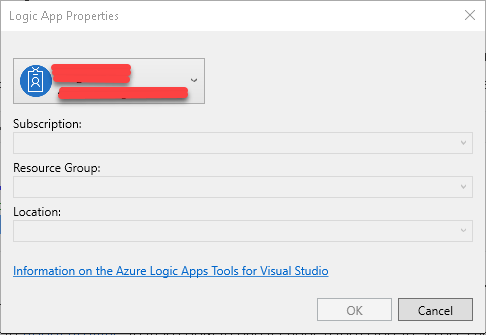
In Visual Studio 2017, first you need to install Cloud Explorer for Visual Studio 2017 (Tools –> Extensions and Updates). To complete this install, you are going to have to close your project and exit Visual Studio and then it will install.
After you re-open Visual Studio, double check to make sure you installed the Cloud Explorer.
Now open the Cloud Explorer (View –> Cloud Explorer)
You should see a listing item that says “Azure” with your login identifier but it may say
Right click on the item that says Azure and then select “Connect to Microsoft Azure Subscription”
You will need to sign in once again to your Microsoft Account even though you are already signed into Visual Studio 2017
Then it says “One or More Services are not supported by Server Explorer, open in Cloud Explorer”.

Oyla! it worked.

Tips on Becoming MCSA – Cloud Platform
This is my first blog on Azure. I would like to share my experience on the Microsoft exam azure. Before starting will would give background of my achievement. “I’ve cleared 70-532 and 70-534 in single day”. Yes, you heard it right! Trust me this isn’t that difficult
Exam Pattern in Pearson (In general):
There will two parts to exam
1) Survey section :
I felt this survey is not important. This will contain set of survey questions about your proficiency level in each section of that particular exam.
Initially, I felt it some junk thing and marked my self as proficient (highest second) in survey for 70-532 exam. After survey, the question which appeared in exam looked little difficult to answer.
For the second exam, I realized this and marked my proficiency level as least second for exam 70-534. The questions which appear in exam weren’t that difficult.
I’m not sure if survey really matters in determining exam question difficultly level, but this is my observation. (This sounds like machine learning to some extent!)
2) Question
There are two type of questions.
Do or Die (I just call like this)
- Yes, these questions can be answered only once and it gets freeze. you can’t be looked back or mark them for “Review later” options.
- This will be mostly yes or no like of questions OR MCQ
- This will be appear in the start like 4-5 questions and at the end 4-5 questions.
Review enabled questions
- These will some where 40+ questions
- Contains
- Case studies
- There will be 3 or 4 case studies will be there. The questions will be asked based on the case study. This questions are tricky as the answer lies in the case study it self. if you
- are confused on two options, then you will have to skim case studies multiple times. I’m pretty sure answer will be present in the question it self.
- some times, answer what you think may not be correct when you think it as general scenario and as you think with case study scenario perspective. Think answer only with respect to case study perspective.
- Direct MCQ
- There will not be any case study for this. Real the question and answer best suited. There will minute differences within options. identity those minute difference to get your answer right
- Code related
- There will section where you will have to fill the missing coding part (if you lucky, you may not get these).
- Below are the practice code you should be familiar
- Await, Async, key words in .net
- Know what methods are used for creating service bus queues, storage accounts, blob and table storage clients.
- For queues, you need know what is SAS token, Peek, Receive, Dequeue operations
- Arrange them in order steps
- There will be steps which will be given in the question. which needs to be arranged in order to achieve an objective.
- Arranging these in the correct order is the most difficult questions (as per me).
- Again, in few question there will be answers within in the questions. I remember a question where it was stated that “variable employee1 and employee2 are already declared”. so in my answer, I didn’t have to select steps for variable declaration.
- Case studies
Preparation – Technical:
- Azure batch vs Web jobs vs Azure schedulers
- Logic apps, service fabric –> This is not present in exam syllabus but you need know what it is. There was one question where this was present as one of the option.
- Difference Azure queue and Azure Service bus queue.
- Storage types, blob (page, append), file storage, Vdisk storage
- what is VMimage,VDisk and VHDx files.
- Memorize various tier present in azure for storage, VM size (D series, G series and others). there will be minimum 4 approx. question on this.
- Worker roles, web roles and role instances.
- Dev test labs
- Json syntax
- ARM template syntax – schemas, parameters, output etc.
- Authentication – SML, OAuth, Kerberos
- Azure active directory domain services and on-premise and active directory, federation identity providers. DirSync, password sync
- Role base access control – contributor, owner, reader and few other types
- Is it necessary to have hand on?
- Actually, not necessary. If you are going through plural sight videos, there will be demo sections which shows code, azure portal usage,
- But, you can still create 200$ credit subscription and explore. This will help you remember terminologies easier.
- Coming to important part, do we need dumps?
- Yes, it doesn’t matter weather the dumps are valid or not. this gives you practice and help you to understand various types of questions. What i have seen is these dumps are generally only 30 percent valid (if you are lucky may be more).
This article is consequence of two exams 70-532 and 70-534 (replaced by 535). This will be partially applicable for other cloud examination path.
Hope this help in your exams! Good luck.

You must be logged in to post a comment.